All About Hydrangeas!
All About Hydrangeas in Arkansas
Ah, the hydrangea! While most shade gardens can boast of at least one plant, if not more; confusion still reigns. Questions about color, changing of bloom color, soil acidity, sun requirements and when to prune are very common and answers can be a little murky because of the sheer quantity of hydrangeas on the market and the differences between them. Hydrangeas are starting to bloom so we thought it was a great time to have a little chat about them! Current Inventory
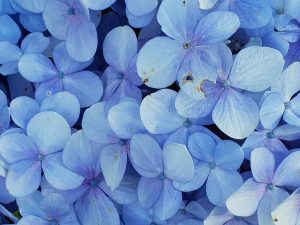
Before choosing hydrangeas for your landscape, it helps to understand the main types, how they bloom, and where they perform best in Arkansas gardens.
Let’s start with the most basic of basics, the different ‘kinds’ of hydrangeas. Botanical names all start with the genus name, then the the species name, then if available, a variety or cultivated variety (a.k.a. cultivar) name.
All hydrangeas have the same genus name of ‘Hydrangea’, and in this post, we are going to talk about some of the species of shrub hydrangea that have been popularized and developed for our landscapes:
Hydrangea macrophylla
These are the traditional mophead and lacecap varieties and are also known as big-leaf hydrangeas. Mopheads have globe shaped clusters of blooms consisting of large male flowers and lacecaps have flattened bloom heads with small female flowers surrounded by larger male flowers. The traditional macrophylla species blooms on old wood (last years’ growth). More recently, the Endless Summer, and other re-blooming varieties, have exploded in popularity, and for good reason! They bloom on both last years’ growth and this years’ growth. This means even if we have a hard winter and all of last years shoots get frozen back, you will still get blooms on the new shoots this summer!
The only pruning necessary is removing dead stems after the hydrangea pushes out new growth in the spring. Wait as long as you can since new growth at branch ends can be the last to emerge. Additional pruning can be done before August if re-shaping or size control is needed. Pruning in August or later could result in the removal of the following years’ blooms. Deadheading, or removing spent blooms, can be done at any time of the year; just cut right below the spent bloom.
As far as pruning the popular Endless Summer hydrangeas, it’s best to just deadhead. If you need to prune for shaping reasons, prune as described in the previous paragraph.
If cutting blooms for cut flowers, you can cut a long stem in June or July but cutting a long stem in August or after could result in reduced blooming the next summer. These pruning tips apply to quercifolia (Oakleaf varieties) also. Most macrophyllas have either pink or blue blooms although there are a few white ones.
Changing Bloom Color
Big- leaf hydrangeas bloom color can be changed by altering the acidity of the soil. Blue Hydrangeas like a pH range of 4.0 to 5.0 while pink blooming hydrangeas need a 6.0 to 7.0 range to stay pink. White blooms will stay white; no amount of working with the soil composition will change that, however, the blooms of some cultivars turn pink as they age. Pink blooms can be changed to blue by adding aluminum to the soil and lowering pH, most commonly by adding Aluminum Sulfate (don’t over do it; plants can be killed by applying too much aluminum sulfate) or organic matter.
Since soils already have an undetermined amount of aluminum in them, bloom color can change after planting or transplanting. Changing blue hydrangeas to pink is a little more difficult because the hydrangea has to stop absorbing aluminum. Hydrangeas take up aluminum better as low pH levels so adding lime to raise the the soil pH can help some. Adjusting the pH of soils in containers is easier so if you can’t make something work in the ground, consider planting it in a large container. Remember that water has a pH too and can affect bloom color, as can foundations and walkways.
A few catching our eye right now are Let’s Dance Lovable and DreamCloud (both Endless Summers varieties), and Centennial Ruby, an exclusive Monrovia release in celebration of their 100th year!
Hydrangea serrata
Mentioning serratas, also known as Mountain hydrangeas, next because they are very similar in appearance to mopheads; the main difference is their hardiness, particularly in colder areas. They break out of dormancy later, so the flower buds are less likely to be frozen back. Other differences include flowers; these are almost all lacecaps and leaves, which are more serrated than macrophylla and with a species name like ‘serrata’, that just makes sense! One last difference to mention; they are more compact in size. We have Tiny Tuff Stuff in right now, and they are gorgeous!
Fairytrail hydrangeas
This is a cascading hydrangea series; they are hybrids between a macrophylla and a pollinator that is kept protected as a proprietary secret. This one blooms on old growth; prune only to remove dead branches. Fairytrail hydrangeas have a unique characteristic; they can bloom at nearly every leaf node, as opposed to traditional hydrangeas that only bloom at branch ends. When branches arch, the nodes open up with blooms, creating what is called a ‘garland’ effect, a waterfall of flowers. We look forward to seeing this plant in landscapes and in pots as it becomes more popular and we get to see more mature plants!
Hydrangea arborescens
These are known as the smooth-leaf hydrangea and have big round bloom heads. The most common arborescens cultivar is ‘Annabelle’ but more are arriving on the scene all the time. This type of hydrangea blooms on new wood so it can be pruned during the winter with no reduction of blooms for the following season; however, do not prune in the late spring or early summer as they are preparing to bloom. Most of these have cream colored blooms but there is a new pink cultivar called ‘Invincibelle Spirit’.
Common cultivars include: ‘Annabelle’, ‘Incrediball’, Invincibelle Spirit (pink variety)
Hydrangea quercifolia
These have very different leaves than all the other hydrangeas; they are shaped like oak leafs…hence the name. Oakleaf varieties can withstand drier soil than other cultivars but it cannot stand wet feet and will develop root rot fast in poorly drained soils. The long, cream colored, cone-shaped blooms can be single or double depending on cultivar and turn a pink color as they age. They also provide fall interest in the garden with leaves that turn red, yellow, orange and purple, and winter interest by displaying exfoliating bark. Pruning of the Oakleaf hydrangeas is the same as for the macrophylla and is mentioned above. These can take a little more sun than the macrophylla and arborescens species.
Common cultivars include: ‘Snowflake’ (double), ‘Snow Queen’, ‘Alice’, ‘Sikes Dwarf’, ‘PeeWee’, ‘Ruby Slippers’
Hydrangea paniculata
Paniculatas blooms are in a panical shape. The growth habit of paniculatas is also much more upright than some other species. Paniculatas are the only hydrangeas that can be pruned into a tree. Cream colored blooms fade into a pink color later in the season. These can be pruned the same as arborescens since they bloom on new wood. Remember not to prune in the summer as they are preparing to bloom.
Paniculatas can take more sun and in cooler climates are even considered a full sun plant. In our area, they can be in full sun if they are in rich, well-drained soil and get enough moisture. However, they may experience some leaf burn. Ideally, they would have all morning sun and some afternoon shade.
Here is a link to a more detailed blog post on growing paniculata species hydrangeas in Arkansas.
Common cultivars include: ‘Limelight’, ‘Little Lime’, ‘Quick Fire’, ‘Vanilla Strawberry’, ‘Little Lime Punch’
Hydrangea anomala petiolaris
And here is a bonus hydrangea; the Climbing Hydrangea. This vining plant has aerial roots that can attach to materials on its own so no trellis is necessary. The blooms are a cream color and are lacecap in form.
Fertilizing and Mulching Your Hydrangeas
Encourage flowering by fertilizing with a low nitrogen, high phosphorus fertilizer (number above 30). Stop all fertilizer applications by August 15th; this will help acclimate the plant for winter.
Adding a four inch layer of organic mulch around the base of the plant will help protect it from winter damage. This isn’t as necessary here in Central Arkansas as in more northern climates. If you choose to mulch the plant, do so around November 30, and then remove in late winter. Once growth emerges in the spring, prune back old branches, about an inch above where new growth is present.
Where to Plant Hydrangeas in Arkansas
Here in Arkansas, all hydrangeas are going to do best with some afternoon shade, although as mentioned above, the paniculatas and quercifolias can take more sun. With the exception of quercifolia, all of the hydrangeas prefer to have rich, well drained, moist soil and part-sun. As mentioned above, the quercifolias do not like “wet feet” and do fine in drier soil.
What is part-sun anyway? Hydrangeas and other plants that like part-sun do best planted in areas that get morning sun and afternoon shade or dappled sun all day long.
So which one is right for your landscape? When picking out plants, take into account the mature size of the plant, bloom color, leaf texture, and sun and soil requirements. Choose the plant that works best for the site and enjoy a healthy plant. It’s much easier than choosing the plant that you like the best and watching it struggle in the chosen site. Current Inventory
Visit The Good Earth for Hydrangeas in Arkansas
Need help choosing hydrangeas for your landscape? Visit The Good Earth Garden Center in Little Rock and bring a photo of your planting area. Our team can help you choose hydrangeas based on sunlight, soil, mature size, bloom color, and the style you want for your garden.