Best Plants for Landscaping in Arkansas
Is a landscape project on your to–do list, and are you trying to figure out the best plants for landscaping which actually works in Arkansas? Whether you are in the dreaming phase, or are almost ready to dig in, the right information will get you going in the right direction!
Here are the key factors we consider when selecting landscaping plants that perform well in Arkansas landscapes.
Cold Hardiness
Here in Arkansas, we have a range of hardiness zones, which means cold tolerance plays a major role in long-term landscape plant selection. This map relates only to the cold hardiness rating of plants and is based on the average lows. We have experienced both more mild temperatures and more extreme lows but on average, we are trending warmer and the updated map reflects that.
We still like the old map best; it reflects what we have seen happening in landscapes, for example, loropetalums. They have a plant hardiness zone of 7 and should be winter hardy here but have been experiencing winter damage due to sometimes record breaking low temperatures we have had in recent years. This is why professional plant selection for landscaping goes beyond the map.
Heat Tolerance
Weather has been both colder and hotter, making it important to consider whether a plant can be consistently successful in our summer heat. One example is spruce. These plants are winter hardy here but in general, they do not love our summer weather.
For some plants, it’s possible to plant them in an area with afternoon shade and have success (yews for example); with others, it’s a no go. Heat tolerance is a key factor when choosing shrubs and trees for landscaping in Arkansas.
Soil and Drainage
This may be the least considered component of plant selection but it’s just as important. This is often overlooked, yet they have a direct impact on how trees, shrubs, and perennials perform in a landscape. Arkansas has a myriad of soil types, each with its own makeup, creating a wide range of environments for plant roots.
You might have rich soil that drains well, you could have sandy soil that doesn’t hold water long enough for plant roots to absorb it, and you could have clay soils that hold water too well, creating a drainage issue that results in plant roots drowning from lack of oxygen.
So, What Are the Best Plants for Landscaping in Arkansas?
We have been landscaping here for over 50 years, and have developed a plant palette that we can confidently recommend!
When you visit Good Earth, these are the plants you will find, along with others that are more borderline but people love so much we need to carry them (loropetalum for example!) What you won’t find is plants that consistently do not do well in our area; it wouldn’t be very nice of us to stock something we know really doesn’t do well here!
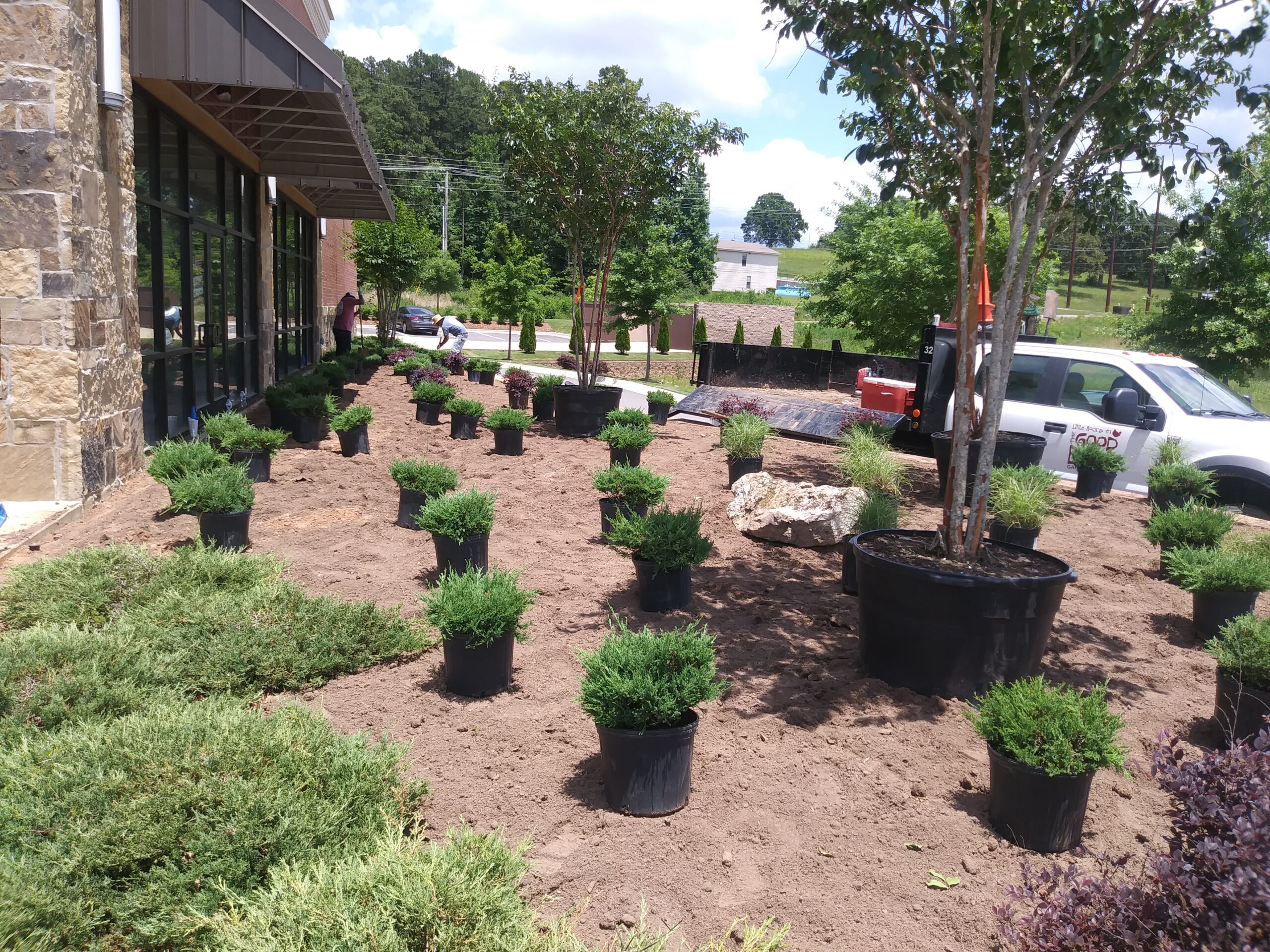
Types of Landscaping Plants and How They Work Together
Trees and Shrubs
Let’s start with trees, including how existing landscape trees influence renovation and design decisions. If you are renovating a landscape, chances are, your landscape already has trees. Either large shade producing trees or smaller accent trees.
For these, consider the health of the trees and if they are located in a spot that will work with your overall plan, especially when thinking about landscaping around a tree. Here is an example; let’s say you have an existing crepe myrtle that continually grows branches that touch your home. Do you want to manage this tree in its current location, transplant it, or is it time to remove and replace it with a new tree that works better for the space you have?
If you are researching planting a new tree, think about the why… as in why are you adding a tree to your landscape?
- Are you looking to add shade using shade trees for landscaping?
- Are you hoping for seasonal interest, such as ornamental landscape trees with fall color or spring blooms?
- Do you need evergreen plants for privacy or screening?
- Are you looking for an anchor tree to visually ground the corners of your home?
- Do you want a focal point where small trees for landscaping can work beautifully, depending on scale?
The why will also often inform the size the tree can grow to, that is called the mature size. Mature size is one of the most important factors in landscape plant planning.
If you have shopped with us before, you have likely been asked these questions, because in designing a landscape, it’s important to know the parameters you are working with, and understand your goals, then choose the actual plant that works best within them for a professional looking and long lasting landscape!
Trees and shrubs are the foundation of your landscape, the building blocks that come right after your home and hardscapes for traffic flow (driveways, sidewalks, etc.) They create a foundation to build on with smaller accent plants such as perennials and annuals; in general, these are the main structural elements of a landscape.
Perennials and Annuals in Landscape Design
Usually, these are herbaceous plants, as opposed to trees and shrubs, which are called woody ornamentals.
What does this mean? Most perennials die back at the end of the growing season, then send out new shoots from the existing root system as the soil temperatures warm and the following growing season begins. Each year, the plant matures, and sends out more shoots, creating a larger plant above ground. Very few are evergreen in our area, although there are some semi-evergreen and even a few cool season perennials, such as Lenten Rose (hellebores), a great example of a perennial plant for landscaping that offers early-season interest.
Annuals, on the other hand, live only for one season and do not come back. Perennials can bloom for a long time, some even a few months but annuals planted in the right location can bloom an entire warm or cool season!
Perennials and annuals are usually eye-catching and are used in groupings throughout a landscape to complement the shrubs, draw your eye to an area, to attract pollinators, to provide cut flowers and more! This is where flowering plants for landscaping add color and texture.
Border Plants for Landscaping Beds
A border plant is defined by its use instead of as its horticultural classification. They are typically used to accentuate and define landscape bed edges. These are usually groundcover, which are kind of their own thing. Sometimes they grow in clumps, sometimes they spread out and well, cover the ground!
One of the most commonly used border plants is liriope, which looks like a miniature ornamental grass but technically is a perennial. Groundcovers are now more used in groupings than to outline the border of a landscape bed. Spreading perennials can be planted to border landscape beds as well; creeping jenny and low growing sedums to name a few.
Pots, Planters and Containers
These are basically the same thing and are usually placed in landscapes as a focal point or to frame a feature, such as steps into a home or an entrance of some kind. They may be planted with any of the above plants we mentioned and can even be transformed into a self-contained fountain.
Learn more by visiting this family of blog posts; there is one for every season, plus more with recipes!
Trees and Shrubs That Work Best for Common Landscaping Needs
Now that we have discussed how different plants layer together in a landscape, let’s call out a few by name!
Landscaping with Trees
We will start with trees, specifically, shade trees as they are typically some of the largest plants in the landscape and are planted away from the house, with distance and placement determined by mature size of the tree.
To see what we have available in stock, and to learn more about some of these trees, visit our online tree inventory. As you can see from the image below, you can click on the different uses of plants to see the trees within that category that work best!
Maples are a wonderful option as a shade tree, with red maples ‘Autumn Blaze’ and ‘Red Sunset’ being two of the most popular. Maples are fast growing and have outstanding fall color when we have our typical weather.
Ginkgo trees are one of the oldest known tree species in the world! They have a unique fan shaped leaf. ‘Autumn Gold’ is a favorite; and as you might expect, the leaves turn a brilliant yellow gold color in the fall.
‘Wildfire’ blackgum trees have brilliant red foliage in the fall, and this one is another nativar. A nativar is an improved variety or cultivar of a native plant; ‘Wildfire’ blackgums as well as the red maples we mentioned above have been bred and selected for desired characteristics. Choosing nativars gives you the hardiness of a native plant, and one that has been chosen as more aesthetically pleasing, bigger blooms, better fall color, etc.
The next most common tree desired in a landscape is a specimen tree. It’s often placed near the front entrance of the home, and maybe the home’s style and form mean you can place several specimen trees. What are we talking about? These trees are also called feature trees, they are chosen for their standout qualities, such as foliage color, blooms, interesting bark, and overall structure. Japanese maples, dogwoods, and ornamental cherry trees are widely used specimens or feature trees.
Additional options are deciduous magnolias like ‘Royal Star’, fringe tree, and styrax, also called Japanese snowbell. Crepe myrtles also fall in this category; just be sure to choose one that fits into your space when it’s mature. Some varieties grow quite large! Last but not least, vitex; heat tolerant large shrub or small tree with summer blooms that attract pollinators.
Next up, some evergreen anchoring plants. These plants visually hold the house in place. They are typically planted off the end corners of the home. ‘Oakland’ holly, ‘Little Gem’ magnolia, ‘Taylor’ juniper are good options.
Shrubs for Landscaping
Now it’s time to build inward and fill out the foundation of the landscape with shrubs! This is where it gets both more simple and more tricky; so many options!
We have a DIY landscape design blog post for some background. When you are starting to plan, consider the depth of the bed, how many layers you want, sun conditions, all that helpful stuff (it’s in that blog post). This is the heart of landscape plant design: layering structure, bloom, and texture to help determine the right direction for plant selection.
Our Shrub Inventory page works like our tree one; you can segment out the different plants based on sun and/ or characteristics. A mix of evergreen and deciduous material, and contrasting leaf color and texture makes for a visually interesting landscape. Depending on the style of your home, you could also go with a more formal look, which typically features less plant variety, allowing symmetry and precision to create the visual appeal, along with a few strong focal points such as larger planters, fountains or statuary.
Back to the shrub selection! ‘New Gen’ boxwoods, yews, fatsia, junipers, and smaller growing hollies are non-blooming evergreens, while azaleas, Encore azaleas, camellias, and gardenias are blooming evergreens. Deciduous plants to add in are Virginia sweetspire, spirea, abelia, butterfly bush, althea, hydrangeas and forsythia. All of these bloom!
Landscaping the Front of Your Home
Now, let’s put all this information together! Below is a two dimensional drawing of a landscape; looking down onto the footprint from above. You can see the driveway and walkway up to the door.
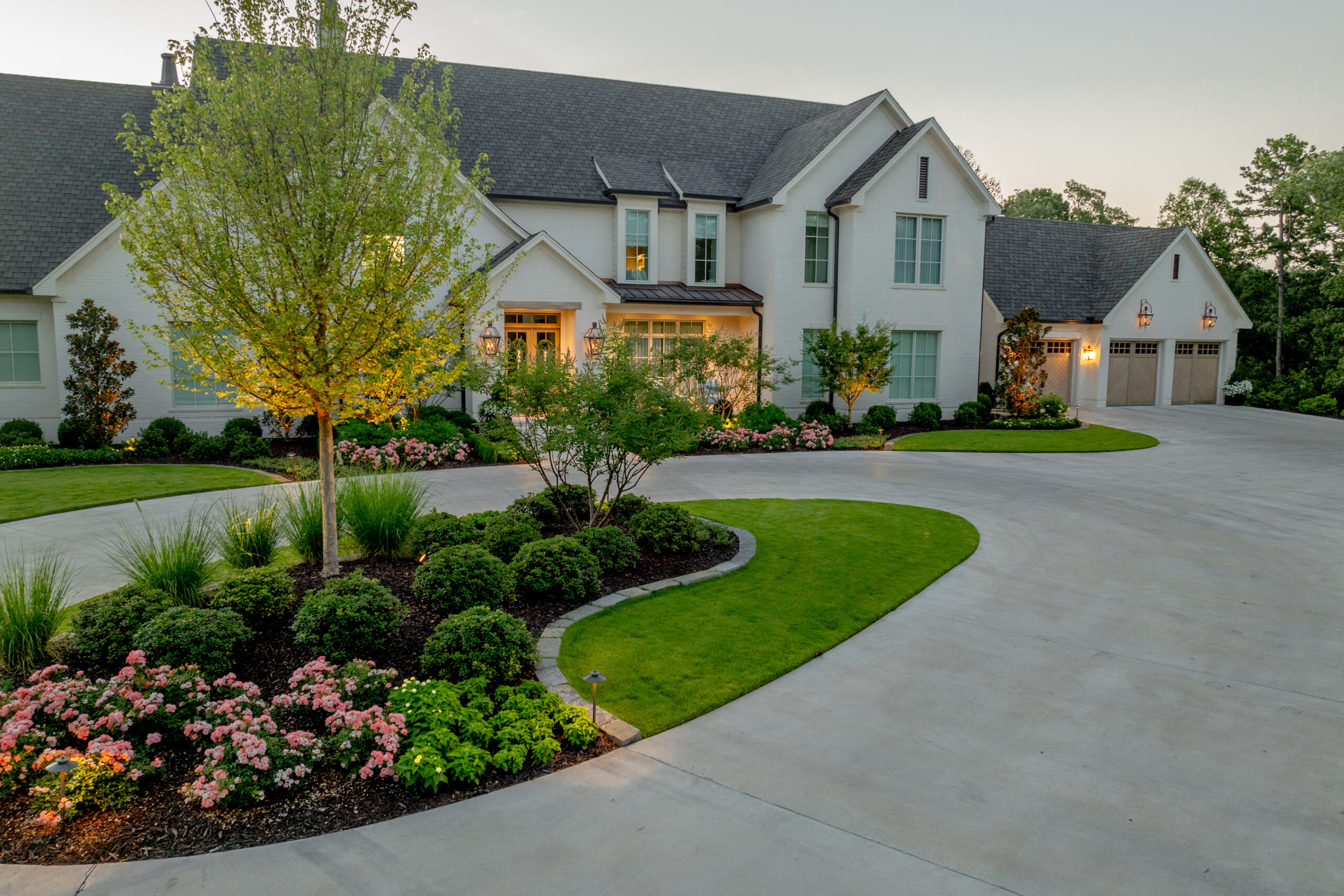
If you aren’t starting from scratch, stand back and look at the landscape you are planning to renovate. Take some pictures. Consider what is working and what isn’t. Maybe some of the plant materials work but not in the current location. Many plants transplant well, and our team is here to help if you need advice on how to successfully transplant something in your landscape.
Ready to Choose the Best Plants for Landscaping in Arkansas?
Our goal with this post is to help you feel confident about your upcoming project. It’s a lot of information, but fortunately, you don’t have to know everything— this is where the knowledge of our team comes in!
We look forward to helping you during your next visit to the garden center and of course, if you have decided to turn your upcoming landscape journey over to an experienced team, we invite you to learn more about our award winning landscape team!