Pollinator Deep Dive: Native Plants, Host Plants, and Nectar Rich Plants
Pollinator plants play an important role in supporting the bees, butterflies, birds, and other creatures that help our gardens thrive. And we love pollinators! Not only are they beautiful and fun to spot out in your garden – especially a vibrantly colored butterfly or a cute little fuzzy bee – but they kind of make the world go round. Did you know that somewhere between 75% and 95% of all flowering plants on the earth need help with pollination – that’s where our pollinator friends come into play!
Fun fact: Pollinators provide pollination services to over 180,000 different plant species and more than 1,200 crops. Something interesting to think about is that one out of every three bites of food you eat is there because of the work that pollinators do. They are kind of a big deal!
How do we support our pollinator friends? How does their world work? What kinds of creatures are considered pollinators? What kind of plants do they like? Are native plants the only way to have a healthy pollinator garden? It can be a little confusing! There are so many questions.
Let’s do a deep dive and get some answers.
What is a pollinator?
Let’s start simple: what even is a pollinator? A pollinator is an insect or animal that moves pollen from the male anther of a flower to the female stigma of a flower!

Pollinators can include: butterflies, bees, birds, beetles, flies, bats, and even nocturnal moths!
What pollinators are native to Arkansas?
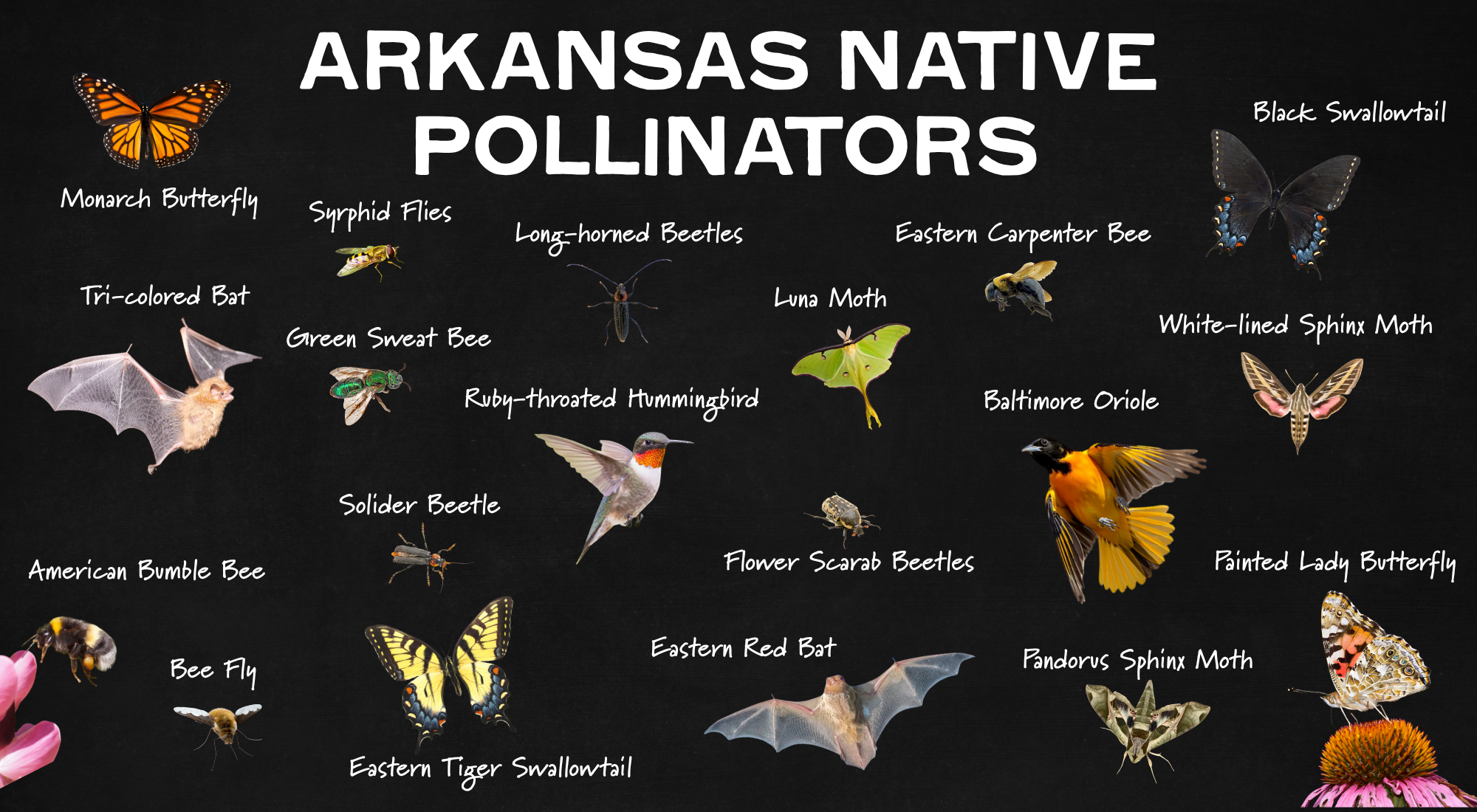
Bees:
American Bumble Bee – A fuzzy native bee that’s an important pollinator for wildflowers, vegetables, and fruiting plants. Loves salvias, bee balm, and coneflowers.
Eastern Carpenter Bee – Large native bee often seen hovering around gardens and tubular blooms in spring and summer.
Green Sweat Bee – A tiny metallic-green native bee commonly found pollinating herbs and native flowers.
Butterflies:
Monarch Butterfly – Famous migratory butterfly that depends on native milkweed as a host plant for its caterpillars. They pass through Arkansas during their migration! Milkweed is a garden must-have for monarchs; here is a post all about growing milkweed!
Eastern Tiger Swallowtail – Large yellow-and-black butterfly frequently seen in Arkansas gardens and woodlands.
Black Swallowtail – Native butterfly whose caterpillars feed on dill, parsley, fennel, and other herbs.
Painted Lady Butterfly – A widespread native butterfly attracted to nectar-rich flowers like zinnias and asters.
Birds:
Ruby-throated Hummingbird – Arkansas’s primary native hummingbird, attracted to red and tubular flowers like salvia and coral honeysuckle.
Baltimore Oriole – A migratory native bird that occasionally assists with pollination while feeding on nectar. They pass through/inhabit Arkansas during migration and breeding seasons!
Beetles:
Soldier Beetles – Common on goldenrod and native flowers
Flower Scarab Beetles – Pollinate open blooms like magnolias
Long-horned Beetles – Visit flowering natives for pollen and nectar
Flies:
Hoverflies (Syrphid Flies) – Bee-mimicking native flies that are excellent pollinators and also help control garden pests.
Bee Flies – Small fuzzy flies that hover near flowers and play an important role in spring pollination.
Bats:
Eastern Red Bat – Native Arkansas bat that supports healthy ecosystems by feeding on nighttime insects around gardens and forests.
Tri-colored Bat – Small native bat commonly found in wooded habitats throughout Arkansas.
Nocturnal Moths:
Luna Moth – A large pale-green native moth that symbolizes healthy nighttime ecosystems.
White-lined Sphinx Moth – Fast-flying native moth often mistaken for a hummingbird while feeding on nectar.
Pandorus Sphinx Moth – Native nighttime pollinator attracted to evening-blooming flowers.
What kinds of plants help pollinators thrive?
There can be a bit of a misconception that native plants are the only real way to support pollinators – and while we are huge fans and endorsers of native plants around here – the reality is that you can still support pollinators without strictly sticking to natives.
A great example of a non-native host plant that still gets the job done for pollinators is dill. Black Swallowtail butterflies, which are native to Arkansas, love dill! Female Black Swallowtails will often lay their eggs on dill’s feathery foliage!
Another great example is that Zinnias, while native to Mexico, still make excellent nectar plants for Arkansas native butterflies, bees, hoverflies, and hummingbirds!
We fully support planting native species – even going fully native – to help support our pollinator friends. Looking for a list of native only plants to help the entire pollinator ecosystem? The National Wildlife Federation has created this helpful resource, just enter your zip code for your list!
For tips on creating a pollinator supportive garden in Arkansas, with both native plants and non-invasive host and nectar rich plants, check out this post. No matter which direction you are going, we support your efforts!
Back to question answer; what kinds of plants help pollinators thrive? In short: native plants, host plants, and nectar rich plants!
What is a Host Plant?
Host plants can be defined as “plants which provide shelter, habitat, breeding sites or serve as a food source as part of the life cycle of another organism.” So, they are essentially acting as the hostess with the most-est for pollinators – providing a safe landing spot to have some babies and have some good food!
Milkweed, as mentioned above, is a great example of a host plant! In fact, this is the only host plant that monarch caterpillars specifically will eat. So, no milkweed = no monarch butterflies, at least none moving through their life cycle, in your garden. Here’s another link to our milkweed blog post, you can read it here.
3 Arkansas Native Host Plants:
- Native milkweed (Asclepias species) – hosts Monarch butterfly caterpillars
- Maypop / native passionflower (Passiflora incarnata) – hosts Gulf Fritillary and Variegated Fritillary caterpillars
- Liatris – Primarily, it acts as a host plant for the flower moths Schinia gloriosa and Schinia sanguinea, both of which feed exclusively on this genus. It is also a great source of nectar for butterflies, bees, and other pollinators!
3 Non-Native (but still helpful) Host Plants:
- Dill – host for Black Swallowtail
- Fennel – host for Black Swallowtails
- Parsley – host for Black Swallowtails
What Role do Nectar Rich Plants Play?
Just because a plant isn’t a host plant or a native plant – doesn’t mean it has nothing to offer pollinators – nectar rich plants also have an important role to play! While they may not be able to support caterpillars or larvae in the same way a host plant can – they most certainly can provide delicious food (energy!) for adult pollinators like butterflies, bees, hummingbirds, and moths through their flowers. Healthy pollinator gardens usually include both host plants and nectar-rich plants to support pollinators through every stage of life. And who among us doesn’t enjoy a little variety?
It’s nice to have options!
3 Arkansas Native Nectar Rich Plants:
- Bee balm (Monarda) – Provides nectar for bees, butterflies, hummingbirds, and moths.
- Lobelia (Lobelia cardinalis & siphilitica) – Provides nectar for hummingbirds, native bees, and wetland pollinators.
- Joe Pye weed – Provides nectar for butterflies, bees, moths, and other beneficial insects.
3 Non-Native (but still helpful) Nectar Rich Plants:
- Zinnias – Provide nectar for butterflies and bees.
- Lavender – Provides nectar for bees, butterflies, and some moths.
- Lantana – Provides nectar for butterflies, bees, and hummingbirds.
The Benefit of Planting Native Shrubs and Trees for Pollinators
Native shrubs and trees are also an excellent option for pollinators! Not only do they provide a great source of nectar and pollen, but they can also help provide shade, stormwater control, windbreaks, access control, food for birds and other animals, and shelter for birds or pollinators. Plus, since they are long lived plants – they can offer these benefits for multiple seasons or decades!
4 Arkansas Native Trees/Shrubs Beneficial for Pollinators:
- Serviceberry – One of the first native trees to bloom in spring, providing nectar and pollen for emerging native bees when few other food sources are available.
- Eastern Redbud – Provides nectar and pollen source for native bees and other pollinators, helping support insects as they become active after winter.
- American Beautyberry – Produces clusters of small flowers in summer that attract native bees, butterflies, and other pollinating insects, extending the season of available nectar resources.
- Southern Magnolia – Supports specialized beetle pollinators with its large fragrant flowers.
Isn’t it fun to learn a little bit more about how our pollinator friends’ life works? It’s like suddenly having eyes to see a whole other secret world. As always, if you have any further questions about how to support pollinators or are curious about what plants you should get to make your garden a safe landing spot for pollinators – you can give us a call or come in and talk with us!