Deer Resistant Annuals & Perennials for Arkansas
Here in the Natural State, we enjoy wild beauty. In Good Earth’s home city of Little Rock, nature is never far from our doorstep—from native dogwoods to bubbling brooks to abundant wildlife, we’re surrounded by homegrown beauty. However, this closeness to nature also carries a threat to our gardens: deer! We get questions every week about how to deer resistant plant. In this post, we are going to focus on deer resistant annuals and perennials for Arkansas gardens.
What does “deer-resistant” mean?
Over time, horticulturalists and gardeners have identified plants that deer tend to avoid eating. A key caveat to take away from that sentence is “tend to”—deer seem to be willing to eat anything if they’re hungry enough! In years where drought or overpopulation leads to fewer options, deer may be more willing to graze on plants they typically avoid. That being said, deer will often avoid plants with strong odors, hairy leaves, or thorns. If plants exist with these characteristics on the edge of your property, you may choose to leave them in place as a natural deterrent!
For a list of plants shown to resist deer, follow THIS LINK to the University of Arkansas’ Cooperative Extension Service website. You may also find other plants that, for whatever reason, deer in your neck of the woods won’t eat. By all means, plant more of those and enjoy your garden!
Strategies to deter deer
In addition to choosing less delectable plants, we have a few other tips for you to try to keep the deer out of your yard.
- Address deer problems early in the season! Deer are habit feeders that like to follow a routine. If you can take your yard off the menu early, the deer will find new sources of food to visit.
- Try repellents (such as Liquid Fence). They come in granular and spray forms, so you can choose the form that you prefer. Essentially, repellents smell foul to deer and keep them away from tasty morsels in your yard. Follow the directions; they are basically training deer not to choose your landscape as their next meal. This means spraying more often at first then tapering down.
- Frightening devices may also work for you. Motion-detecting sprinklers and lights can be effective, but need to be moved around the yard so the deer won’t simply habituate to their presence. Or maybe a dog in the backyard will keep deer at bay!
- To protect vegetable gardens, shape your beds as narrow rectangles and surround them with high (at least 8’) wire fences. The combination of a tall fence that’s hard to jump and a narrow landing space should keep deer out of your vegetable beds. Small plots can be protected with wire cages with a roof.
If deer have gone from majestic wildlife to pest feeders in your yard, try a multi-pronged approach to convince them to leave your yard alone. A single deer-repelling measure may not be enough on its own to keep deer away, but combining strategies simultaneously will make deer think your yard isn’t worth the effort. Choose deer-resistant plants for your next garden bed, try repellents on those plants they always seem to eat, and stay consistent in your methods until you can break their habits!
What is a ‘safe’ ANNUAL to plant?
Our landscape team installs seasonal color on many properties that have a big deer population. Here are some annuals that have worked well for us over the years.
Vinca – This sun loving annual is tough, loves hot sunny gardens. Choose from upright varieties or the Cora Cascade series, which is a spreading or trailing series. It trails over pot edges or spreads out nicely in the ground. A few Cora Cascade vinca plants cover a lot of ground!
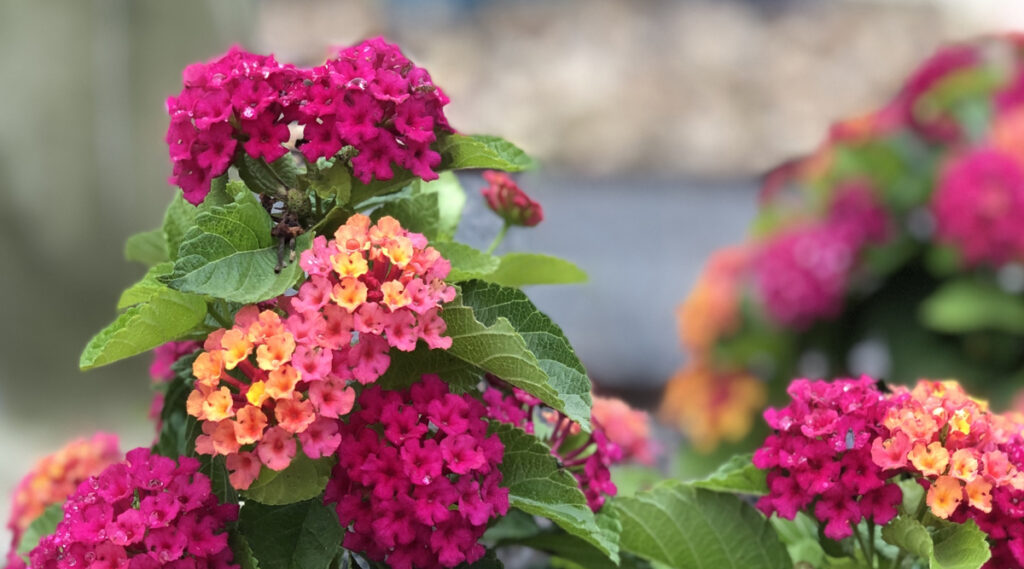
Lantana – Another tough, sun loving annuals that is right at home in hot spots! It also another plant that offers a wide variety of size options, as well as bloom colors. This may just be the annual with the most new varieties released each year. If not, sure seems like it is! We love the Bandana series for pots, smaller spaces or as a front layer, as this series stays smaller. The Proven Winner Luscious Lantana series grows larger and features big puffs of blooms in a huge array of color options.
Verbena – We don’t mean to be repetitive but yes, another sun and heat loving annuals with big blooms that continue all summer. The Superbena series from Proven Winner brand is a winner; the color options are spectacular!
Cleome – Not the old kind we used to have in 6 pack flats that would reseed and become an issue, but the Proven Winner Senorita cleome that doesn’t reseed is a real winner. It offers height that some of the other annuals do not, making it a good choice as the back layer of a warm season summer color display, or as a the thriller in container gardens. Sun for this one too. The blooms are unique; it’s called spider flower for a reason!
Sun Coleus – Hear us out, just plant some. You won’t be disappointed, even if it doesn’t bloom. Actually these plants bloom but you want to pinch those off so the plant can give all the energy to the leaves, because that’s where the drama is! And yes, this is another one with tons of foliage color options and a variety of mature sizes.
Scavola – Also known as fan flower, this sun loving annual has blooms that look like a little fan. Available in white, purples, blues and pinks. Very hardy!
Angelonia – Surprise! The summer snapdragon, as this garden favorite is called, is another deer resistant annual that is showy. We love the shape of this bloom. When planning a color display, think not only about the mature size these plants will be, but also the flower form for impactful visual interest! This one has salvia like flower spires.
What is a ‘safe’ PERENNIAL to plant?
Agastache – Also known as Hummingbird Mint, Agastache is essential for pollinator friendly gardens. These plants, also known as Hyssop, feature showy, fragrant blooms that attract (yup, you guessed it!) hummingbirds! They also attract other pollinators such as bees and butterflies. Several varieties are Fall blooming.
Baptisia – Baptisia features trifoliate blue-green leaves and flowers on spikes that range from blue to yellow in color. These perennials prefer full sun and well-drained soil, and can tolerate some drought. Baptisia will tolerate poor soil conditions.
Bearded Iris – Irises thrive in full sun and well-drained soil, which makes them perfect for Arkansas! They are also fairly drought tolerant, so they handle the summer heat well once established. They are known for their large, ruffled flowers and sword-like foliage. This is a perennial we grow ourselves, and we offer several different colors!
Beebalm – While Beebalm (also known as Monarda) won’t attract deer, it will attract your friendly neighborhood pollinators! Don’t be surprised if you spot bees, butterflies, or even hummingbirds hanging out around these vibrant, firework-like blooms! If you’re looking for something low-maintenance, Beebalm is easy to grow and isn’t very fussy. While it can grow in shade, it will likely be happiest in a brighter spot!
Bleeding Heart – Bleeding Hearts are a true show-stopper as it looks like it’s name! The outer pair of inflated petals folds back to reveal a teardrop-shaped structure dangling down out of the heart shaped flower – it’s pretty magical! These beauties prefer a shadier spot and their blooms usually emerge in early spring. This is also a perennial we grew ourselves this year!
Butterfly Weed – Butterfly Weed is a native perennial that has much to offer sun gardens! Flat-topped orange or yellow flower clusters attract bees and butterflies and are followed by fruit and showy seed. Butterfly Weed is a must have for butterfly gardens and although it can be difficult to get established, it is hardy once it is. This is just one kind of Milkweed; we have others you will want to check out too.
Purple Coneflower – Coneflower is actually native to Arkansas, so it’s no surprise that it is very heat and drought tolerant. This is another perennial that acts like a magnet for pollinators! It’s a great low-maintenance choice for full-sun areas that will add a fun pop of color to your garden!
Catmint – Also known by its genus name Nepeta, is a tough perennial, a proven performer in hot, dry weather. Deadheading or cutting back hard after the first flush of blooms in the summer will encourage additional blooming until fall. Average well-drained soil is good for Nepeta plants. Larger varieties may require staking and need to be given room to mound and ramble some. Shorter varieties won’t need staking but would also like a little extra room to spread out. Catmint and Catnip are Nepetas and contain nepetalactone, which felines love. Catnip has a higher concentration of it, and therefore is the more purfurred Nepeta (see what we did there 😉
Columbine – Columbine has a very exciting and unique look to it! It’s petals make a shape that almost looks like a little flying bird or shooting star – very recognizable! Columbines easy to grow as long as they are given a fertile, well drained soil. They do best in a shadier spot.
Coreopsis – Coreopsis, also known as Tickseed, are low maintenance perennials, native to the prairies and woodlands of North America and Central Asia. Blooms are daisy-like and come in a variety of colors such as yellow, orange or pink. The blooms are long lasting and dance above the fine-textured foliage. Blooms are attractive to bees and are great for cutting. Deadheading will prolong bloom season. Taller varieties might need trimming mid-season, encouraging new growth and additional blooms. Divide in early spring if desired.
Foxglove – Foxglove is a dreamy tall perennial with that produces multiple tubular blooms that belongs to the snapdragon family! In Arkansas, foxglove will do best in part shade with some protection from intense afternoon sun. Not only is it deer resistant but it is highly toxic to both humans and pets if ingested. The blooms come in shades of purple, pink, white, and sometimes even a soft yellow, and they’re a favorite of hummingbirds and bees thanks to their nectar-rich flowers!
Penstemon – Penstemons are native to North America, and features long-lasting, brilliantly colored blooms that attract hummingbirds. There are many different types of penstemon. The leaves are lance-shaped or oval, and may be purple-red such as ‘Husker Red’. Most varieties require well-drained soil for success.
Rudbeckia – Rudbeckia, also known as Black-eyed Susan, are native plants that offer long-season blooms from summer to fall. Rudbeckias show particularly well in mass, providing bright blooms all season long. Adding these plants to native plant gardens or mixed landscape beds for a naturalized look. Rudbeckias grow well in average soil but the soil needs to be able to hold moisture.
Russian Sage – Russian Sage isn’t a true Sage (genus name Salvia) but instead is from the genus Perovskia. Russian Sage feature long, wispy wands of lavender or blue flower and silvery foliage. This plant is a long season bloomer; from summer to fall, it shows off it’s large (bloom spikes up to a foot long!). The aromatic, silvery leaves are striking; the serrated leaves give the plant a fine texture with pairs wonderfully with larger leafed plants or stones. Large varieties may need staking later in the season. Groupings of Russian Sage create a dramatic backdrop for smaller perennials and work well in a border planting.
For more deer resistant perennials, check out this link!