How to Water Smarter!
Waterwise gardening is all about giving your plants the right amount of water at the right time, especially during hot Arkansas summers. More water means healthier plants, right?
 Uhm, no. The relationship between soil and water is even more important than the quantity of water. The perfect situation for plants is well draining soil and the correct quantity of water…plants grow, roots stay healthy, and all is well. But as we all know, not all soils in Arkansas drain well, natural water is sparse at times, and comes at flood rates other times. What does this mean for you? It’s time to put your landscape to the test!
Waterwise Gardening Starts with Smart Soil and Water Habits
1. Check your drainage.
Let’s talk about soil drainage a bit. It’s really important to overall plant health and establishment. Here is a link to a whole post or keep reading for the basics. To test your soil drainage, dig a hole in the ground about a foot deep, fill it with water, and see how fast it drains. In a well-drained soil, the water should go down about an inch per hour. If it goes down in seconds, you may have a really sandy soil that struggles to retain moisture. For these soils, adding organic matter like compost and/ or sphagnum moss will help. On the opposite end of the spectrum, if there is still water standing the next day…..eek… that means you have poor drainage. For already established plants, dig a hole nearby about the same size as the rootball of existing plants and perform the same test. Years of planting and maintaining landscapes have taught us that we have many such landscapes. In extreme cases, water has sat in freshly dug holes for an hour with no movement at all!
If your soil isn’t draining well, amend the backfill with materials such as our Organic Compost to allow space for air, dig the planting hole wider to allow roots to grow outwards easily, and plant a tad high. Planting high is a general term, you don’t want to create a volcano! Planting high in this circumstance is when the existing level of soil in the container is higher than the surrounding soil by an inch or so. If you are building a new landscape and your soil fails a drainage test, you may want build berms or raised areas in your landscape.
Unless you are growing aquatic plants, roots cannot survive in water, at least not long term, so the rootball gradually shrinks while the top part keeps growing. Eventually the shrunken root system isn’t able to support the upper growth, and the plant that looked fine last month turns brown and takes it’s last breath.
What is the next step, after the soil drainage is known and addressed? Keep reading!
2. Water longer and less often.
Less frequent, deep waterings are better for establishing roots than shallow, shorter waterings. If the soil is compacted, cycle and soak by watering for 10 minutes, then another 10 minutes, then 20 minutes, allowing 30 minutes between sessions to increase absorption. Find out how much water is getting down into the root zone of plants by using a moisture meter. Moisture meters are inexpensive (under $15) and can save you hundreds of dollars… and your entire landscape! How long to water?
Every landscape has its’ own issues; shade, sun, the aforementioned drainage considerations, and plant health. The main thing is watch your landscape to see how long it takes to dry out between waterings and adjust the time and days of watering appropriately. Avoid watering between 5:30 am and 6 pm; not only are these the hours of peak usage, but you can also lose up to 30% of your water due to evaporation by watering in the heat of the day! For summer days when the plant foliage can dry out before it gets dark out, you can water later in the evenings but early morning is recommended. In general, you want the foliage to be dry going into night time to avoid foliar fungus issues.
A moisture meter for plants is one of the easiest tools to use for waterwise gardening because it helps you know whether water is actually reaching the root zone. This is one of the simplest waterwise gardening habits because deep watering plants helps moisture reach the root zone instead of staying near the surface.
3. Mulch.
This will help the soil, and plant roots, retain moisture in the root zone area. Mulching also reduces weeds which are superb water thieves. What kind of mulch? For best results, choose a mulch that retains moisture like shredded hardwood as opposed to pine bark nuggets.
4. Check your system.
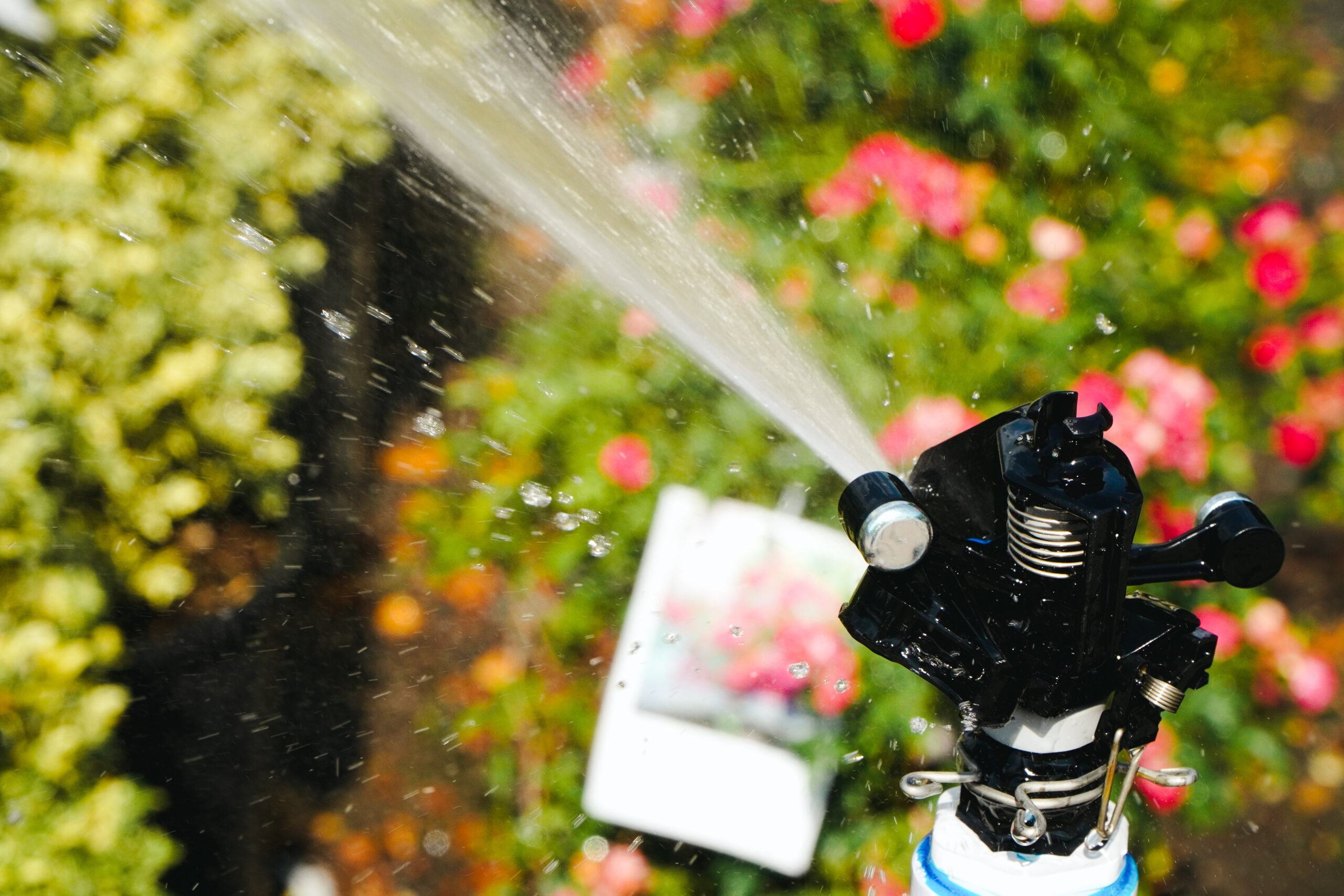
Like everything else, technology has made great strides in the efficiency of sprinkler systems, including the improvement of rain sensors and the creation of smart systems. Renovating your system to include these features is a perfect way to water smarter. Also, make sure sprinkler heads cover just landscape areas, not driveways and try not to water during windy times. Look for leaks and breaks in the system and address issues quickly.
5. Watch for problems.
Stress is accumulated in plants, so water issues paired with pest problems this year will mean more highly stressed plants next year. So water smarter and watch for issues regarding not only water but disease and insects too. Walk through your landscape every few days to catch issues before they go too far. Plants have what is called a permanent wilting point, which if gone beyond, there is no coming back.
6. Plant smart.
Using native plants that are drought tolerant helps reduce the amount of water your landscape will need. Regardless of what you are planting, use Good Earth brand Jump Start at planting. It’s sort of like a root stimulator although it works by creating colonies of mycorrhizae, which can increase the plants’ uptake of water and nutrients by up to 1,000 times!